Grassroots venues are dying
In 2023 alone the Music Venue Trust (MVT) reported a net loss of 127 grassroots music venues - approx. 15% of the sector - and the Music Venues Alliance (MVA) saw its membership drop from 835 trading venues down to 810 in 2024. Grassroots music venues are closing down at an alarming rate of around one per fortnight, resulting in the loss of over 4,000 jobs, and more than £9m in income for musicians.
According to the MVT 2024 Annual Report almost half (44.2%) of the venues attributed closure to financial issues with operational issues (27.8%) and eviction or redevelopment (14%) following. Furthermore, while the sector contributed £526m to the economy, grassroots venues reported a net profit of just 0.48% which is only just over £3,000 for the financial year due to rising costs with 43.8% of venues reporting a net loss in 2024. The MVT’s Emergency Response Service, set up to support venues in avoiding permanent closure, saw a record 200 venues (almost a quarter of the trust’s members) seek help from the service; up 18% on the previous year.
The report also adds that the average grassroots music venue suffered a loss of almost £200,000 in 2024 alone when considering the expenditure and income related to live music.
Live Music is in Decline
A contributing factor to the struggle of grassroots venues is the steady decline in the number and frequency of touring dates with the average tour in 2024 consisting of 11 dates across 12 major cities which is around 50% lower than in 1994 with 22 dates over 28 major cities on average. In addition to this, 17 towns or cities are no longer on the primary or secondary touring circuit including Leicester, Reading, York, and Bedford among other major towns and cities.
The number of ticketed live music events has decreased by 8.3% on the previous year with the total number of events put on by the average grassroots venue seeing a sharp decline of 15.2% since 2023. Average attendance per venue also decreased by 15.4% and ticket revenues saw a decline of 13.5% forcing venues to decrease their live music offer.
Why Are Grassroots Venues Struggling?
There are a few reasons why grassroots venues are closing at such a rate in recent years, starting with the most obvious: the cost of living. This is something felt by both venue owners and people who go to these venues. With prices rising, it is becoming increasingly more difficult for people to afford everyday essentials so when it comes to going out to gigs, it has fallen down the list of people’s priorities as they simply cannot afford it; whether it is ticketed with ticket prices a factor or free where drinks and transport are also associated costs that most people cannot afford to take on.
When it comes to venue owners, they are also people struggling with everyday costs and with business expenditure also rising in conjunction with revenue declining on top, the strain on venue owners is becoming too much to bear and in the case of the 127 who have been forced to shut their doors, it is just not financially possible to keep them open.
Unknown to most, there are other factors contributing to the struggles of grassroots venues, for example business rates. In Scotland, business rates without relief remained in 2024 resulting in an additional £780,000 in pre-profit tax for MVT members while in Wales, the rate relief was cut in half to 40% from 75% causing £127,000 in additional costs for venues.
As for England, they are due to follow Wales in cutting relief rates from 75% also to 40% which will result in a staggering 140% increase in business rates, creating £7 million in pre-profit taxation for grassroots venues across the country.
Considering the overall economic performance of the sector, the 810 such venues in the UK returned an entire gross profit of just £2.5 million in 2024.
Another area to highlight is transport. Public transport infrastructure in the country in dwindling and becoming increasingly insufficient in both rural towns and larger cities which are suffering from poor interconnecting services.
The decline in public transport is negatively affecting grassroots venue’s ability to reach broader audiences, and while some venues try to accommodate transport concerns in setting stage times, this is ultimately at a detriment to venues’ reliance on food and beverage spend which makes up most of their revenue.
Scotland and Wales are especially suffering; cities like Glasgow are vibrant centres of nightlife and entertainment but due to public transfer cut off times, many venues are prevented from benefiting from the late-night culture and economy. The last departure within an accessible distance is often 11pm and can be as early as 5pm depending on the direction so for many gig-goers there is no safe, assured late-night transport network so they are limited to events within a smaller radius, reducing the amount of viable venues to attend.
The MVT conducted three case studies as part of their report on Chambers in Folkestone, The Moon in Cardiff, and The Jazz Bar, Edinburgh to see the effects on those venues in particular. Read the full report here.
Moles - One Of The 127
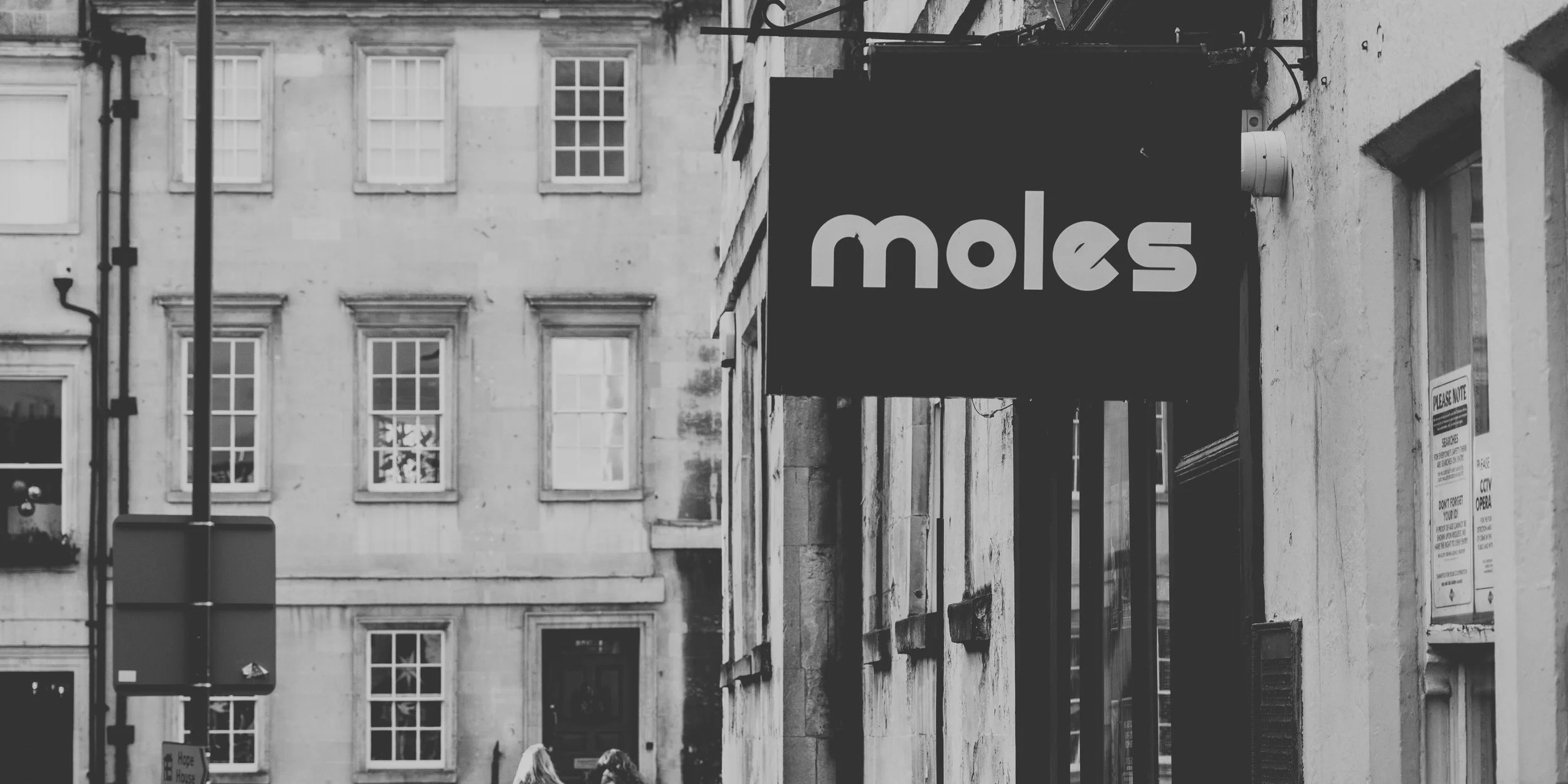
In December 2023, renowned grassroots venue, Moles closed its doors after 45 years. The 220 capacity venue in Bath hosted some of the biggest names in music including The Smiths, Radiohead, Oasis, Eurythmics, Bastille, Mumford & Sons, Blur, The Killers, Pulp, Tori Amos, The Cure, Ed Sheeran and recently Supergrass, and The Last Dinner Party; some long before they made it big and in 2018 Fatboy Slim played a three hour set to celebrate the venue's 40th anniversary.


The venue was one of the last venues remaining from the first Oasis tour and according to “heartbroken” owners Phil Andrews and Tom Maddicott “Of the estimated 366 grassroots venues Ed Sheeran played before making it big, 150 have closed“.
In a statement following the venue’s closure co-owner Tom Maddicott said "Making the decision to close Moles was horrendous", blaming rising bills and costs due the the cost of living crisis for the unavoidable decision to file for insolvency; he went on to add "the reality is that live music at grassroots level is no longer economically viable".
Owners Phil Andrews and Tom Maddicott said in a statement following the closure: “This decimation of the sector has to stop now. Unless bands have these stages to play, where will they hone their talents and become these huge artists that fill these arenas and stadiums around the world?”.
What Is Being Done About It?
One way grassroots venues are being supported is through creating awareness; whether it’s through work done by the MVT, the venues themselves, independent organisations like ourselves, or music fans, any way to spread awareness of GMVs and the struggles they are facing in current times is a positive step towards preserving these venues. Spreading awareness and increasing visibility of these venues encourages people to support the MVT’s work and the venues themselves.
The MVT’s Emergency Response Fund: a fund supported by donations which can be accessed by struggling venues to support them financially. The fund was utilised a record number of times in 2024, with a total of 200 cases since it was set up in 2017 and has saved multiple venues from closing down in recent years.
In response to the Culture, Media and Sport Select Committee’s report on grassroots music venues in 2024, Creative Industries Minister Sir Chris Bryant has supported the Committee’s recommendation to introduce a voluntary levy on all stadium and arena tickets to help support grassroots venues, festivals, artists and promoters.
Important steps have already been taken by artists such as Coldplay and Sam Fender, who actively donate a portion of their tour revenues to the grassroots sector, and by LIVE through establishing a charitable trust which will distribute the proceeds of a voluntary levy which is set to be in effect as early as this year (2025).
Finally, attending venues: one of the most direct ways you can support your local grassroots venues. By buying tickets for paid gigs and buying food and drinks at free-to-attend gigs, you are directly financially supporting grassroots venues so whenever you can, we urge you to go out and support your local grassroots venues and artists.
Grassroots Music Venues are experiencing their most difficult period in recent times but through collective effort at all levels of the music industry, they are being recognised and work is being done to protect, improve, and preserve the important venues which are the backbone of the music industry.